For any cleaner, contractor or supervisor who has to put in time above ground level, this is a compliance guide of some utility. Under Work Health and Safety laws in Australia, a cleaning business is obliged to have fall risks in hand with appropriate controls, to instruct and oversee its people and to have the documentation to show for it at the site.
You will not find one “working at heights certificate” in this country that is valid for all manner of cleaning work. What is called for is a matter of the job, the location, the worker’s ability and the rules of the state or territory. The way to be safe is straightforward: make an assessment of the hazard, do away with the necessity of working at height if you can, put in place dependable controls, consider elevated cleaning equipment options and put the method on paper before there is any climbing or operating of equipment.
Rhys Campbell, a Welsh-Australian from Fremantle, has put this guide together in no uncertain terms. It is meant as general information; for anything site-specific one should look to a safety professional, regulator or other competent authority.
What The Rules Entail For Cleaners
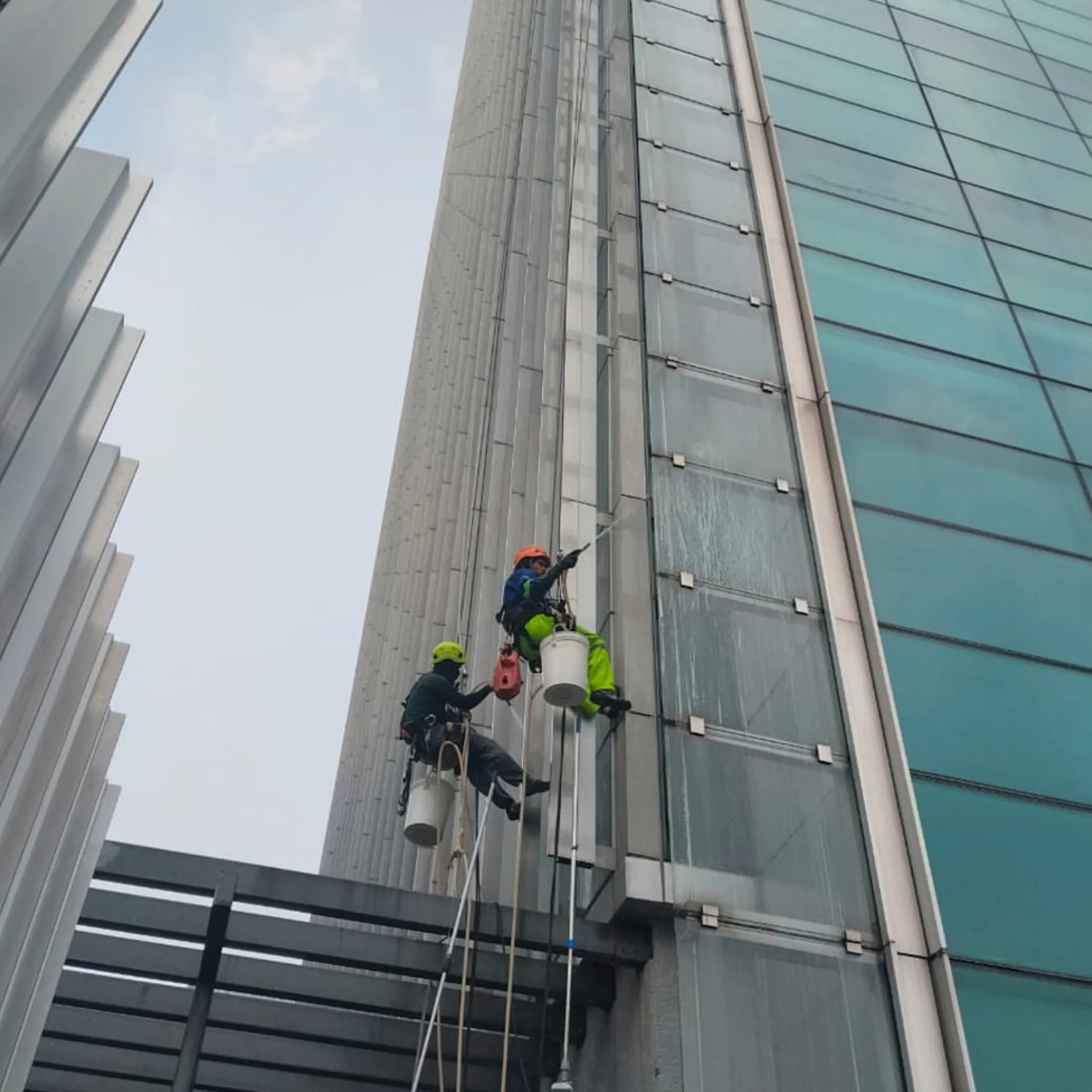
The 2026 regulations are to be found in the Work Health and Safety laws of the various states and territories, with the model WHS Regulations and what the regulators say to back them up. While the letter of the law differs from one jurisdiction to another, the requirement is uniform: protect the public, visitors and your workforce by minimising or eliminating the risk of a fall.
Roof work is not the only thing covered. One might be washing a façade, pressure washing, tending to a warehouse or doing high-rise maintenance. Even with a mop in hand, an awkward reach and a wet ledge on an open edge can present a proper pearler of a hazard.
Then There Is The Question Of Height
It is a common query as to whether a certain height will set off a rule. The answer is not so cut and dried. Should a worker come off a low platform onto hard ground, into traffic or water, or on top of some machinery, the injury can be severe.
A good risk assessment will take into account more than the measurement of the task. Look at the landing area, how one gets in and out, the condition of the surface, the weather and lighting, the capability of the worker and the presence of the public. Add in wind, poor visibility, hoses and slippery chemicals and a task of modest height can be quite dangerous.
When Does It Become Height Work?
If there is a possibility of a person falling from one level to another and being hurt, it is working at heights. Ladder, scaffold, step platform, boom lift, balcony or roof, it does not matter. Nor does the fact it is a commercial job make it any safer; if anything it means more traffic and paperwork. A cleaner on a mezzanine next to an open edge or using a ladder for a high window will require the same controls as one on a skyscraper.
Cleaning Scenarios You Will Encounter
From accessing an awning over a footpath to cobweb removal by a stair void, or a suspended access system for the windows and an elevated work platform for the beams in a warehouse. Some of these risks can be mitigated with an extension or water-fed pole and long-reach tools so as to not have to go up at all. But do not think they eliminate every problem; with a long pole you can still have issues with overreaching, manual handling or coming in contact with electrical services.
On The Duties Of Employers And Contractors
A safe system of work is what is expected. Competent staff, the right equipment, maintenance, supervision and emergency plans. The client is not free to pass the buck on safety and tell a contractor to get on with it.
In cases where a number of businesses are on site there has to be consultation and coordination. The building manager may have the keys to the roof, the specialist company the platform and the cleaning contractor the method of work. Without communication between them the gaps will be as big as the atrium.
Put A Plan In Place
Hazard identification and risk assessment are where to begin. Get a look at the area before the equipment comes in. Check the ground, anchor and access points, roof strength, overheads, the route the public will take and what is in place for rescue.
As for the workers, they should know without question who is in charge of the exclusion zone, who is to check the gear, who can call a halt to the job and the procedure in the event of a fall. Do not mistake a harness for a rescue plan. In the event of a fall, a worker can be in trouble from suspension trauma and a protracted rescue.
Then there is the matter of record keeping. Companies are well advised to have on file their training and equipment inspection records, incident reports, site documentation, insurance papers and chemical SDS. One might argue public liability insurance is a commercial imperative, yet it is no substitute for WHS compliance nor does it condone unsafe work.
RIIWHS204E Training Explained
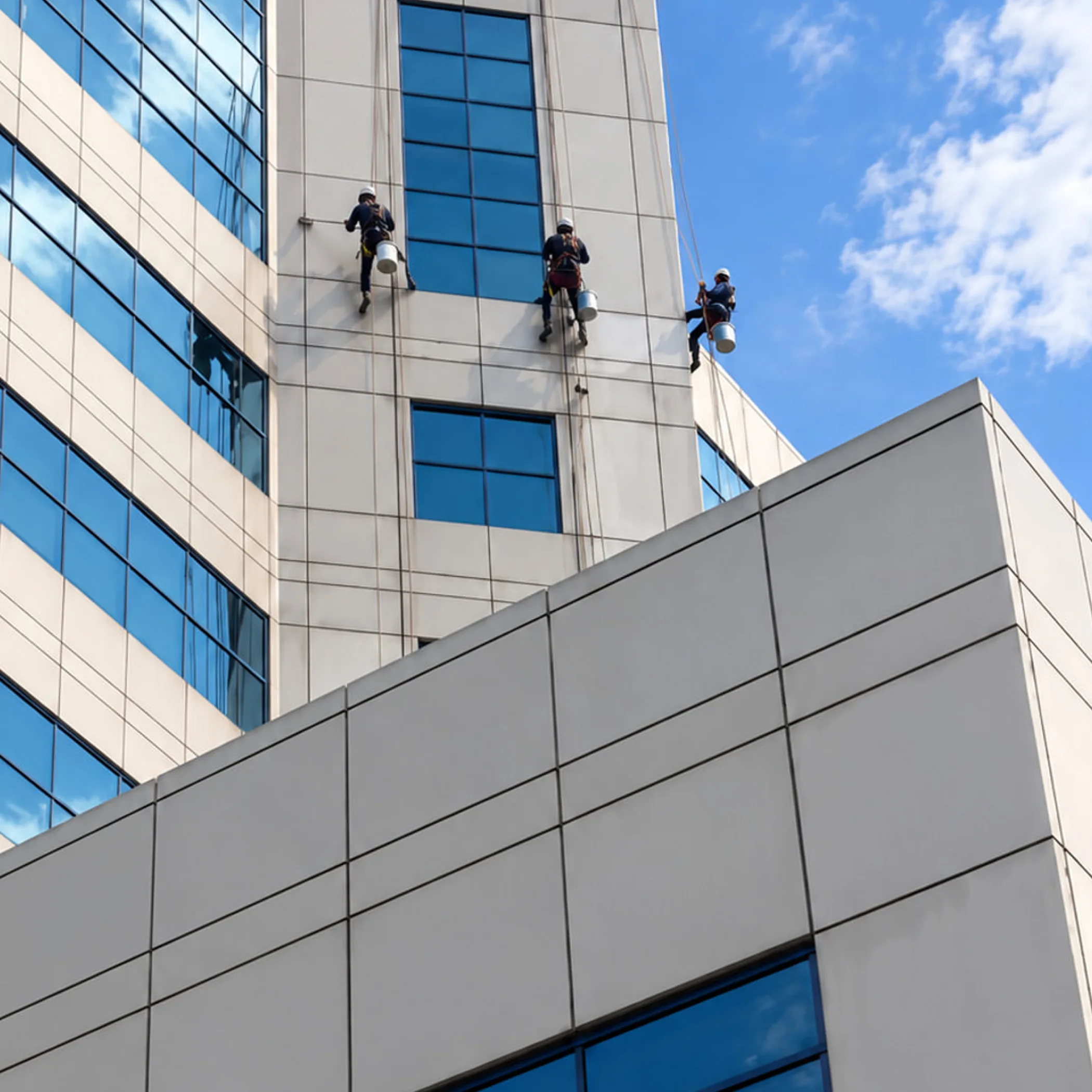
The unit RIIWHS204E – Work Safely at Heights is one of the more familiar for imparting the requisite knowledge and skills to those working where a fall is a possibility. Provided the registered training organisation’s conditions are met, a participant who has done well will be issued a statement of attainment.
While of use to a contractor, supervisor or cleaner, the unit is not a blank cheque for every height task. It cannot stand in for a job-specific risk assessment, site induction, the supervision or rescue training that is called for.
Training To Suit
Make sure the course you put together with a reputable registered training organisation has some practical assessment for the work involved. Put questions to them on whether the training is adequate for your team when it comes to the equipment, anchor selection, restraint, ladder safety and fall arrest.
An elevated work platform operator could be in need of further training and an EWP high-risk work licence if the jurisdiction and equipment dictate it. A general height work course will do for other things. Do keep the training record and be mindful of refresher needs; competence is not something a worker retains if he is seldom called upon for the task.
There is a tendency to think a certificate travels with the worker. It is not so. The emergency arrangements, the site, the task and the equipment must be verified on each occasion.
A Cleaning SWMS
High-risk construction calls for a Safe Work Method Statement. But cleaning is not by definition construction work and the law does not demand a SWMS for all of it. That said, a site controller or principal contractor may insist on one in the course of contractor management.
Should the cleaning be part of a demolition, refurbishment or other high-risk activity, the SWMS has to cover it. This means setting out the hazards, controls, the people and equipment responsible, what is to be done in an emergency and so forth. You will not find a useful plan in some generic document off the internet.
Put Some Use in Your SWMS
Plain language is the order of the day for a sound cleaning SWMS. It should make clear how the workers will get to the area and back, set up, deal with chemicals, put distance between the public and the job and see to the weather. Have a briefing with the workers and put it on record. If the access route is closed or the surface is no longer safe, review the SWMS. Let the document be part of the job, not left in a folder while people make it up as they go along.
Fall Risk and Equipment
Let the hierarchy of controls be your guide. See if the height task can be eliminated, or a ground-based method substituted. Engineering controls like guardrails or scaffolding should come before any administrative ones or PPE.
For a cleaning business the wisest choice of equipment is often one that leaves the worker on the ground: an extension pole, water-fed system, telescopic brush or a step platform made for the purpose. What is right for the job is a function of the reach, the surface, the weather and the training of the man on the spot.
Match Equipment To The Site
Ladders are for getting about, not to be used as a work platform of any kind. Workers ought not to be lugging awkward loads up one or using it on anything less than stable. Nor should they be straining sideways. Step platforms call for level ground and a setup that is correct, not one that requires overreaching.
As for scaffolding, only someone with the proper competency should be erecting or inspecting it. Guardrails and edge protection must be up to the location. A broom and a bucket do not make a traffic-control system, however much the supervisor would like to believe it.
Operating an elevated work platform demands competence and pre-start checks, an eye to overhead hazards and exclusion zones. Roster a worker only after you have ascertained the local requirements and the licence category needed.
With window cleaning, fall prevention can be achieved through ground poles, rope-access controls, guardrails or a well thought out platform. Fall arrest is to be employed as part of a system with a viable rescue method and suitable anchors, nothing less.
State And Territory Compliance
It is the job of state and territory regulators to see that the laws in their jurisdiction are enforced. For a business with cross border operations it is unwise to think one document or way of reading it will do for every site; each regulator must be consulted.
Among the principal regulators are SafeWork NSW, WorkSafe Victoria, Workplace Health and Safety Queensland, SafeWork SA, WorkSafe Western Australia and WorkSafe Tasmania, as well as the guidance from Safe Work Australia on working at heights. The Australian Capital Territory and Northern Territory put forward their own requirements and have separate workplace safety authorities.
| Work situation | Typical control focus | Documents or competence to check |
|---|---|---|
| Ground-based high-reach cleaning | Manual handling, electrical clearance, stable footing and keeping the public at bay | Risk assessment, chemical SDS and equipment instructions |
| Ladder or step platform work | A stable setup, three points of contact, no overreaching and a task of short duration | Worker competency, inspection record and a task briefing |
| Scaffold or roof-edge cleaning | Guardrails, edge protection, weather, access and falling objects | Rescue plan, site-specific documentation and inspection records |
| Elevated work platform cleaning | Ground conditions, overhead services, exclusion zones and operator competence | Licence confirmation if called for, pre-start checks and training on the equipment |
| Construction-related cleaning | High-risk construction controls and coordination with the principal contractor | SWMS, consultation records and site induction |
Regulator guidance and what the law demands are not static. One should refer to the current page for the state or territory in which work is being done, with an eye to licensing, notification obligations, mobile plant and construction activities.
Practical Compliance Checklist
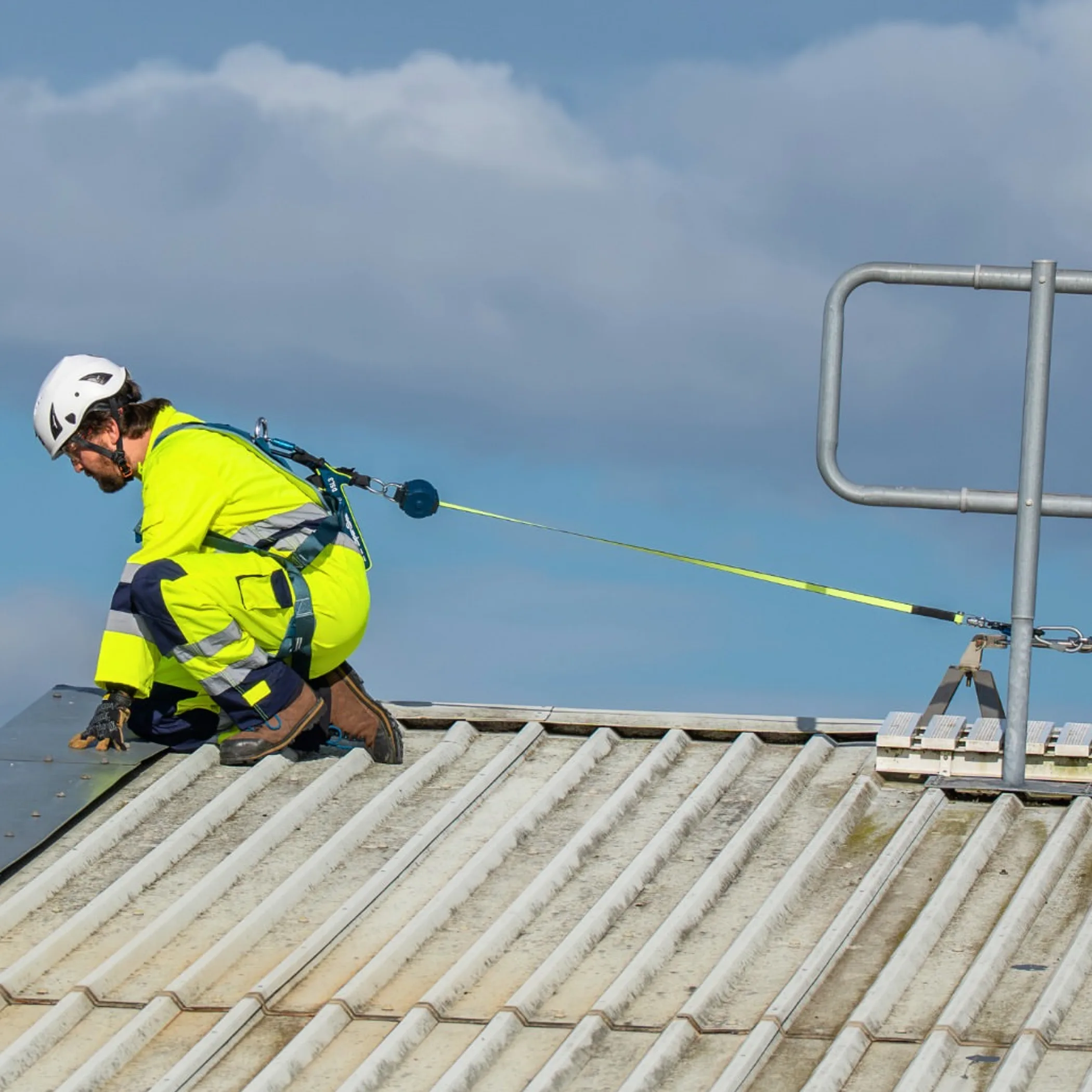
A supervisor would do well to use this checklist before putting a team on a high-rise, façade or roof. It is meant to be a discussion at the point of access, not something to be ticked off in the van.
- Put fall, falling-object and electrical hazards, chemicals, the weather and any public access on the table.
- Where you can, eliminate the height element of the task with extension poles or ground methods.
- Make sure guardrails, scaffolding, restraint or fall-arrest gear are of a suitable type.
- Verify the licences, supervision, training and equipment competency of your workers.
- Have a SWMS and risk assessment to hand for the task if necessary.
- Give ladders, harnesses, ropes, anchors, barriers and the like a once over.
- Workers should know the ins and outs of storage, dilution and personal protection; check the chemical SDS to be sure.
- Pedestrians, vehicles, deliveries and doors are to be controlled by an exclusion zone.
- Be clear on your first aid, rescue and communication set up and the limits imposed by the weather.
- Any changes to the method, defects, incidents or the outcome of the briefing and inspections are to be put on record.
For a new job with only a day’s preparation, make the site walk-through, the public exclusion zone, your access and rescue plan the priority. A well put together folder will not save a worker from an anchor point not built to take the load.
Expectation Versus Reality
One might expect a ladder and a confident worker to be all that is needed for a brief cleaning job. In practice short tasks put pressure on people to cut corners and rush the setup. More than one incident has occurred because the worker has been there before and thinks today will be like yesterday.
There is an expectation of safety with a harness. But a harness is of no use without a rescue plan, the right fit, compatible equipment, proper anchorage and clearance below. You may think a SWMS is proof of compliance, yet a stale one that does not reflect the work will tell a different story.
Then there is the matter of the season. From November to April the Top End and northern parts of Western Australia can be brought to a halt by cyclone alerts, wind, lightning and the wet season rain. Down south winter will turn roofs and platforms slick. And in summer the heat is an issue for equipment, batteries, chemicals and the workers themselves. Before you leave, check the conditions and have a clear way back from the roof or platform to somewhere safe.
Frequently Asked Questions
What Are The Australian Standards For Working At Heights?
Duties in managing fall risks are established through the model WHS Regulations, relevant regulator guidance and Work Health and Safety laws. The task, site conditions and the state or territory will dictate the correct requirements, and for some equipment technical standards and the manufacturer’s instructions come into play.
Do Cleaners Need A Working At Heights Certificate?
No single certificate is mandatory for a cleaner working above ground. RIIWHS204E – Work Safely at Heights is training that may be appropriate but it is for the employer to make sure the worker is up to the method and equipment. Specialist work such as rope access or rescue could call for more.
Is A SWMS Required For Cleaning At Heights?
Not of itself. But if the work is of a high-risk construction nature a SWMS is called for, and a principal contractor or client may want to see one regardless. It is good practice for a cleaning business to have a practical risk assessment and a SWMS when the construction requirements apply.
Do Cleaning Businesses Need A High-Risk Work Licence To Operate An EWP?
Some elevated work platform operation will require a licence, contingent on the class of equipment, its characteristics and the jurisdiction. Make certain of the licence category and provide the requisite site induction and training on the equipment prior to starting.
What Equipment Can Cleaners Use To Avoid Working At Heights?
Water-fed and extension poles, telescopic brushes and long-reach vacuums are among the ground-based systems available. They lessen exposure to falls but hazard identification, manual-handling and electrical clearance are still in order. The best approach is one that allows the work to be done without anyone having to stand at an unprotected edge.
Keep The Plan Grounded
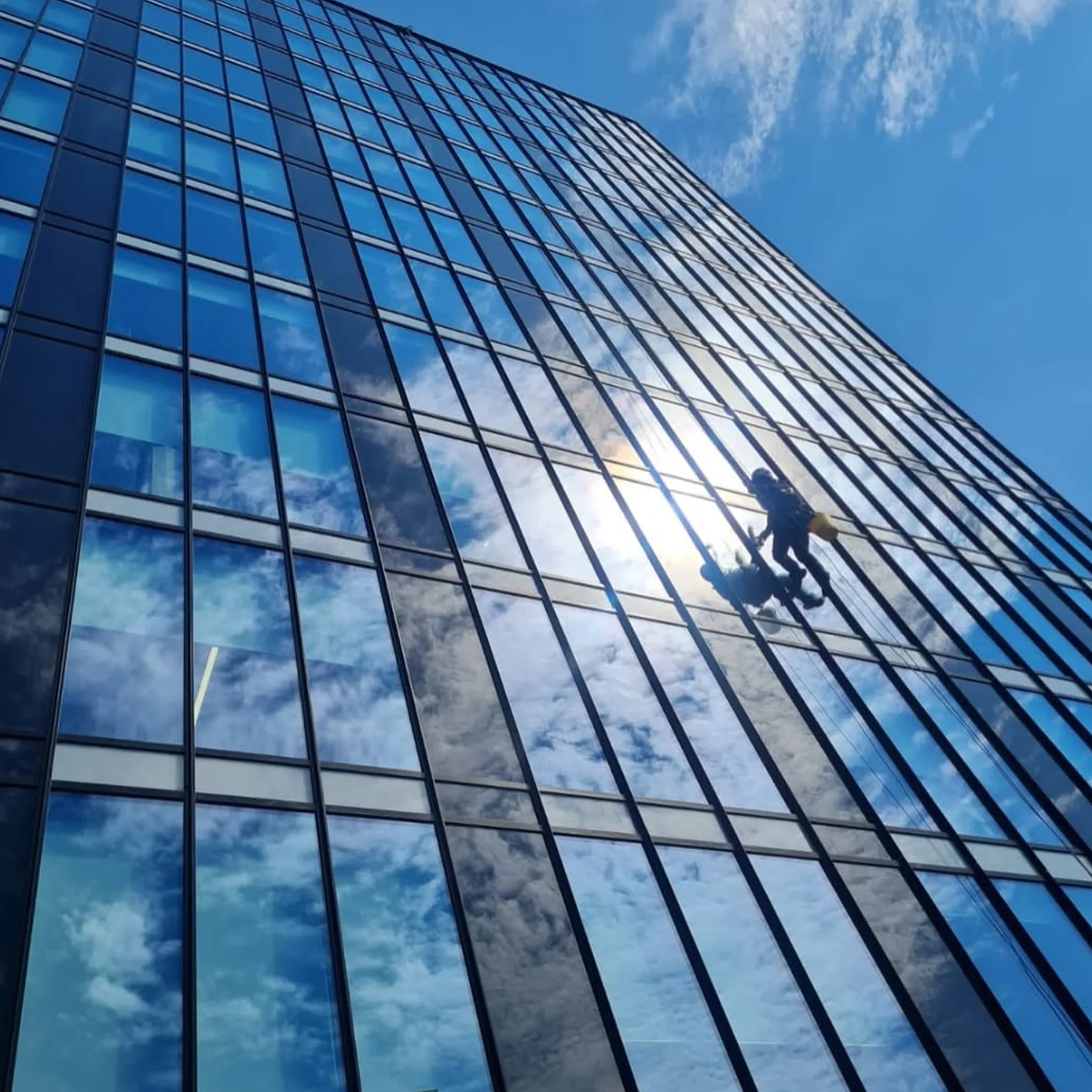
Before the harness or platform is unloaded from the vehicle is when compliant commercial cleaning at heights begins. Document the controls, train the worker, identify the hazard and opt for the safest method. Change of conditions means you stop.
The message for 2026 is that working at heights is about planning, supervision, rescue and equipment, not just holding a certificate. Be honest with the paperwork, have the equipment inspected and where the job permits, keep feet on the ground.
